







Neurological Cinema and the Architecture of Empathy
The Evolution of the Cinematic Mirror
In 1824, when the first case of Gilles de la Tourette syndrome was documented in a French noblewoman, the medical community viewed her involuntary vocalizations as a moral failure rather than a biological glitch. We have spent two centuries trying to reconcile the visible output of the brain with the internal identity of the individual. Much like the transition from analog film to digital sensors, our understanding of the human hardware is moving from fuzzy speculation to high-definition clarity.
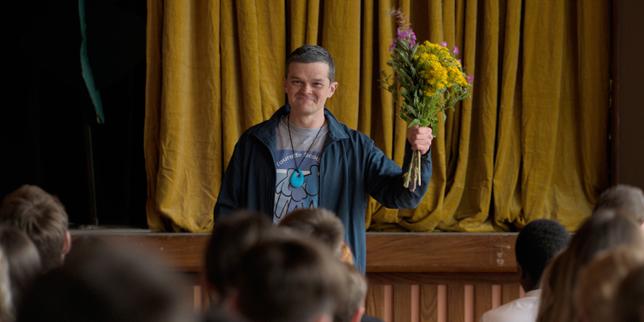
With the release of Plus fort que moi, we see the latest iteration of a lineage that began with the breakout success of Rain Man in 1988. While that era often relied on the 'savant' trope to make neurodiversity palatable to a mass audience, the current wave of storytelling is interested in the friction of everyday life. It is no longer about the superpower; it is about the lived experience of navigating a world built for the neurotypical.
The screen is the primary laboratory where society tests its capacity for empathy before codifying it into culture.
The British production avoids the polished edges of traditional drama. By focusing on the visceral reality of Tourette’s, it forces the viewer to confront the breakdown of the social contract—the unwritten rule that we must all remain predictable in public spaces. This tension is the core of the film's narrative weight.
The Algorithm of Authenticity
For startup founders and product designers, this shift in representation mirrors the move toward inclusive design in the software world. We are beginning to realize that the 'average' user is a statistical myth. Just as Plus fort que moi highlights the jagged edges of a neurological condition, modern interfaces are being rebuilt to accommodate cognitive diversity. The edge case is becoming the use case.
The risk of cliché remains a constant shadow. Historically, cinema has treated neurological conditions as a shorthand for quirkiness or a plot device to spark conflict. This reductionism is the storytelling equivalent of technical debt; it is a shortcut that costs more in the long run by distorting the public's mental model of disability. This latest film attempts to pay down that debt by grounding its protagonist in a realistic social context.
Marketers should take note of how audiences are responding to this unvarnished realism. In an economy increasingly dominated by artificial perfection and AI-generated veneers, there is a mounting premium on the raw and the unfiltered. Authenticity is not just a buzzword; it is a defensive moat against the commoditization of digital human interaction.
We are watching a slow recalibration of what society deems 'normal.' Five years from now, the distinction between neurotypical and neurodiverse will likely feel as antiquated as the divide between offline and online, as we recognize that the human spectrum is far wider and more complex than any single movie could ever capture.

OCR — Texte depuis image — Extraction intelligente par IA