







The Glass Keychain: How a Mimicry of Trust Is Emptying Mac Desktops
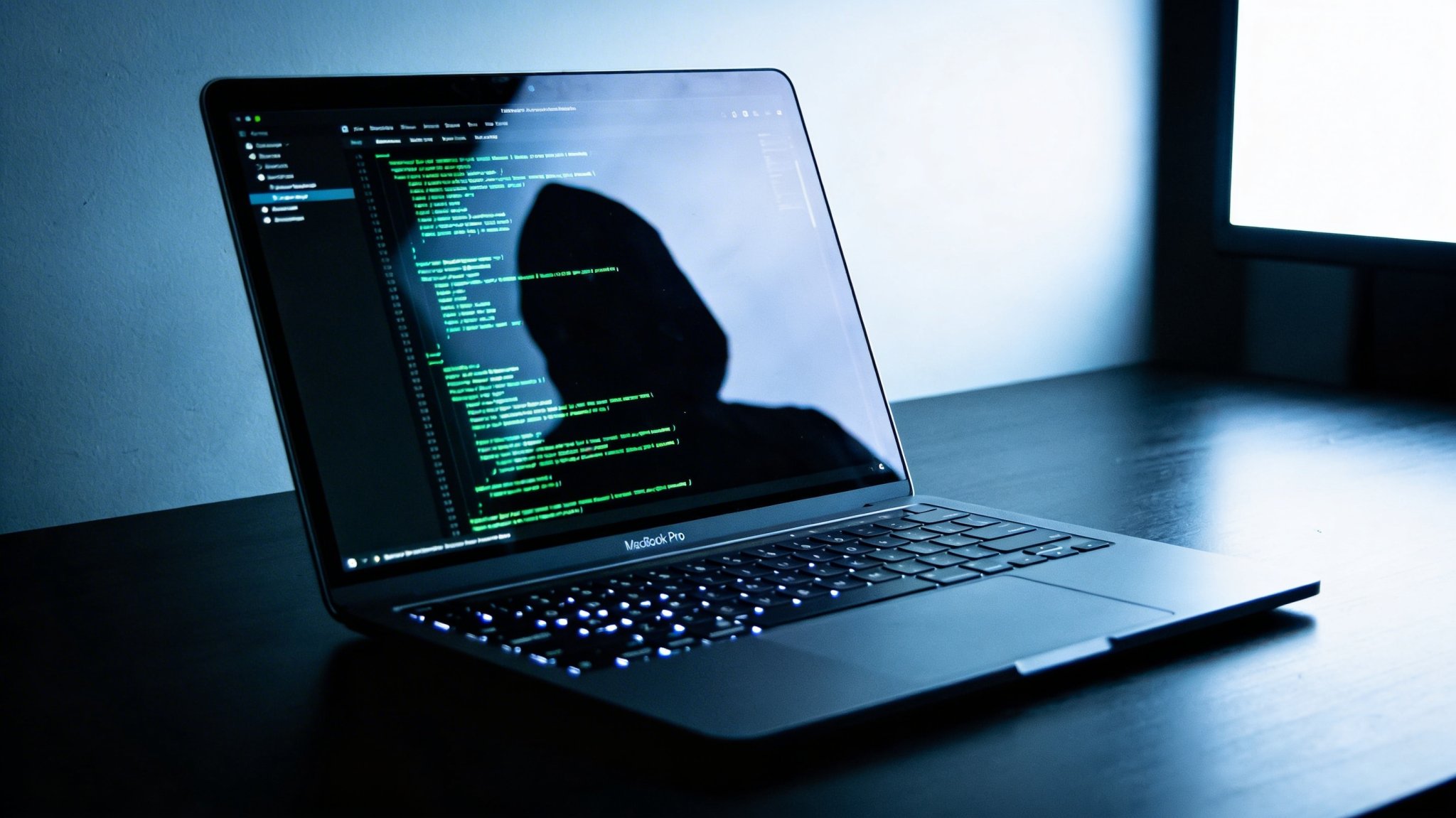
When Sarah, a freelance designer in Portland, saw the familiar grey-and-white Cloudflare verification box pop up on her screen, she didn't hesitate. She had seen that spinning circle a thousand times while browsing for stock assets. She clicked the checkmark, a muscle memory honed by a decade of digital citizenship, and resumed her work. She had no way of knowing that her split-second decision had just handed over the keys to her entire digital life.
The Architecture of Deception
Security is often less about code and more about the aesthetics of authority. We are conditioned to trust certain interfaces—the subtle bounce of a macOS window, the clinical cleanliness of a security prompt. A new strain of malware, identified by researchers as Infiniti Stealer, exploits this very conditioning by dressing itself in the visual language of the guardians it intends to subvert.
The attack begins with a replica. It presents a nearly perfect facsimile of a Cloudflare challenge page, the kind we encounter whenever a website wants to ensure we are not a bot. But this version is a hollow mask. By mimicking a service synonymous with safety, the software bypasses our natural skepticism. It isn't hacking the hardware; it is hacking the habits of the person sitting in the chair.
Instead of verifying a human user, the script executes a silent raid on the system's most private corners. It targets the Keychain, the encrypted vault where Apple users store everything from banking credentials to the Wi-Fi passwords of their favorite coffee shops. In an instant, the vault is forced open, and its contents are spirited away to a remote server, leaving the victim with a screen that looks exactly as it did a moment before.
The Fragility of the Digital Vault
There is a specific kind of intimacy we share with our devices. We treat the Keychain as a digital extension of our own memory—a quiet, trusted assistant that holds the things we are too busy to remember ourselves. When that trust is turned against us, the violation feels psychological as much as it does technical.
The most dangerous threats are the ones that look like the help we’ve been taught to expect.
Infiniti Stealer represents a shift toward what might be called social engineering of the interface. It doesn't rely on complex exploits that bypass the operating system's kernel. Instead, it asks the user for permission, disguised as a routine security check. Once the user interacts with the fake form, the malware gains the foothold it needs to begin its harvest of cookies, credit card details, and personal identities.
This method highlights a growing tension in our relationship with technology. As systems become more secure, the human element becomes the primary target. We have built walls so high that the only way for a thief to enter is to knock on the front door while wearing a mailman's uniform. We are increasingly living in a world of digital shadows, where the very icons meant to signal safety are the ones we should fear most.
Modern macOS security features like Gatekeeper and XProtect are constantly updated, but they struggle against the sheer speed of social mimicry. The software arrives through deceptive downloads—often disguised as legitimate productivity tools or software updates—and then waits. It is a patient predator, relying on the fact that eventually, we will be too tired or too distracted to look closely at the pixels.
The Weight of a Click
We often talk about the internet as a series of pipes and protocols, but for the individual, it is a collection of fleeting choices. Each click is a tiny contract signed in the dark. We trade a moment of attention for access to a service, rarely stopping to consider if the entity on the other side of the glass is who they claim to be.
The rise of Infiniti Stealer suggests that our reliance on visual cues is becoming a liability. We have spent years training ourselves to look for the padlock icon or the verified badge, but what happens when those symbols are easily forged? The erosion of trust in the interface means that every interaction, no matter how mundane, now carries a hidden weight. It requires a level of vigilance that is exhausting to maintain over a sixteen-hour day of screen time.
Perhaps the solution isn't more layers of encryption, but a return to a more cautious form of digital intuition. We must learn to recognize the subtle 'uncanny valley' of fake prompts—the way a font might be slightly off, or the way a window appears without the usual system animation. It is a fragile defense, but in an age where our most private data is stored behind a single checkmark, it may be the only one we have left.
As Sarah sat in her studio that evening, her laptop remained warm to the touch, humming quietly as it processed her designs. Outside, the sun was setting, casting long shadows across her keyboard. She felt safe, enveloped in the familiar glow of her OS, unaware that in the silent pulse of the background, the vault was already empty. We are left wondering how many of our own digital doors are currently standing wide open, waiting for a breeze to reveal the truth.

Convertir PDF en Word — Word, Excel, PowerPoint, Image