







The Steel and Silico Convergence: Why Luxembourg is Defending the Iron Horse from Invisible Threats
The Ghost in the Locomotive
In 1825, the opening of the Stockton and Darlington Railway redefined physical proximity. It was a victory of friction-reduction, allowing coal and people to move at speeds previously reserved for birds. Today, we are witnessing a second great acceleration, but this time the friction is digital. The locomotives of the 21st century are no longer just mechanical beasts; they are high-frequency nodes in a continental network of sensors, signaling systems, and power grids.
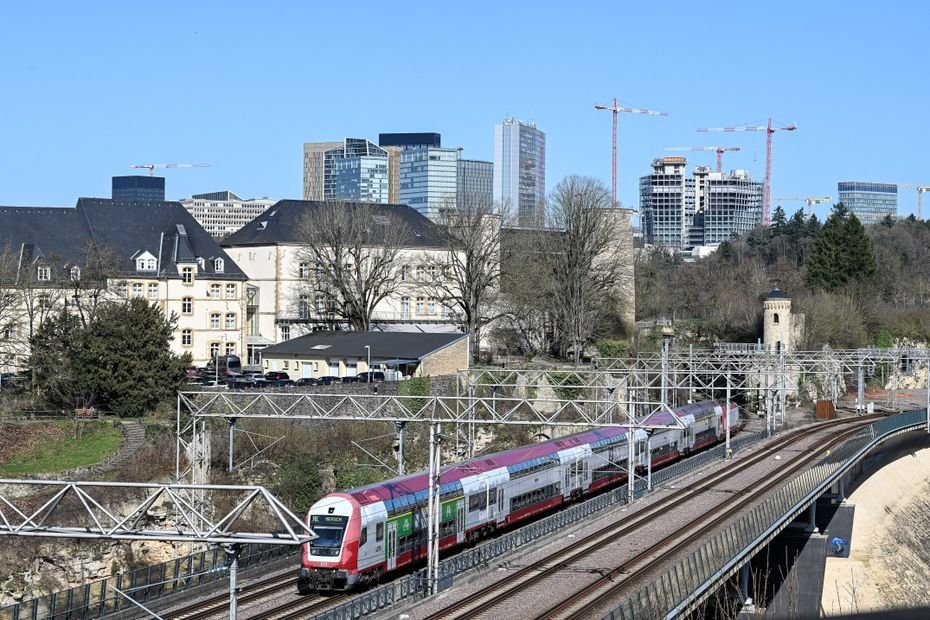
Luxembourg, a nation that has historically functioned as the metabolic hub of European finance and transit, is moving to secure the literal tracks of its economy. On June 10 and 11, 2026, the Grand Duchy will participate in Cyber Europe 2026. This biennial exercise moves beyond the theoretical, simulating a coordinated digital assault on a vital organ of national life: the railway system. It represents a shift from protecting data to protecting momentum.
The vulnerability of modern infrastructure lies not in its physical fragility, but in its inability to distinguish a valid command from a malicious one.
When we digitize a train, we remove the air gaps that once acted as natural firewalls. A legacy system was isolated by its mechanical nature; a modern system is exposed by its connectivity. This connectivity is the prerequisite for efficiency, yet it creates a surface area that spans from the central dispatch office to the individual smart-sensor on a freight car axle.
From Kinetic War to Algorithmic Friction
The upcoming exercise treats the railway as a living system rather than a static asset. In the past, disrupting a supply chain required physical sabotage—explosives or blockades. Today, the same result can be achieved through a software-defined embargo. By manipulating the signaling systems that govern safe distances between trains, an attacker can induce a state of paralysis across an entire border region without ever stepping foot on the ballast.
Luxembourg’s decision to center its defense strategy on this specific sector reflects an understanding of cascading failures. If the trains stop, the labor pool of the Grand Duchy—largely comprised of cross-border commuters—is severed. The movement of goods stalls, and the financial district’s support systems begin to fray. It is a recognition that in a networked world, the peripheral systems are often the most critical points of failure.
Technical resilience in this context is not about building unhackable walls. Instead, it is about developing graceful degradation. This means ensuring that when the digital brain of a locomotive is compromised, the system can revert to a safe, manual state rather than spiraling into catastrophe. The 2026 exercise will likely pressure-test these fallback protocols, forcing engineers and cybersecurity experts to communicate in a language that blends binary code with mechanical engineering.
The Geopolitics of the Commute
We often think of cybersecurity as a matter of server rooms and encrypted emails, but the frontier has shifted to the physical world—the Internet of Moving Things. European rail networks are increasingly integrated through the European Rail Traffic Management System (ERTMS). While this integration allows a train to travel from Amsterdam to Milan without changing locomotives, it also creates a shared risk profile. A vulnerability in one node can theoretically migrate across borders.
Luxembourg is acting as a laboratory for this continental challenge. By inviting various stakeholders to participate in this simulation, they are acknowledging that security is a collective behavior rather than a product you buy. It involves the person monitoring the screen, the technician on the tracks, and the policy-maker in the capital. These exercises are the digital equivalent of fire drills for a building that is still under construction.
As we move toward 2030, the distinction between a software company and a transport agency will continue to blur. Every transit hub is effectively becoming a data center that happens to move weight. The resilience of our cities will be measured by their ability to maintain physical flow even when the digital architecture is under duress. The passengers of the future will travel not just on steel rails, but on a foundation of verified code and resilient logic.

Editeur PDF gratuit — Modifier, fusionner, compresser