







Scaling Sound: The Technical Logistics of the Sagrada Familia Inauguration
Why does this performance matter for large-scale events?
Managing a high-stakes event at a venue like the Sagrada Familia is a massive logistical challenge. On June 10, Pope Leo XIV will visit Barcelona to inaugurate the central tower of Antoni Gaudí’s masterpiece. This isn't just a religious gathering; it is a masterclass in coordinating audio, crowd flow, and timing in one of the most acoustically complex spaces on earth.
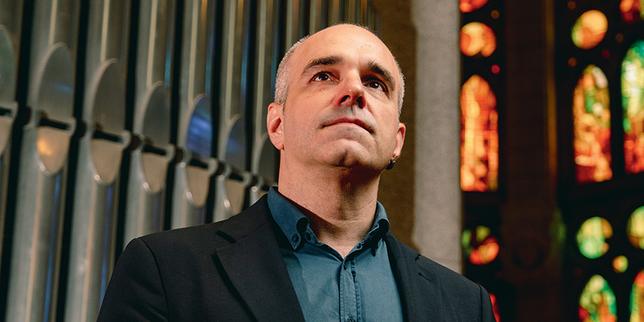
For builders and event planners, the technical takeaway is clear: when the environment is the main character, your tools must adapt to the architecture. Juan de la Rubia, the head organist, isn't just playing music; he is acting as the technical lead for a soundscape that must fill a 170-meter tall structure without losing clarity or synchronization.
How do you manage acoustics in a vertical monument?
The completion of the main tower adds a new dimension to the building's internal volume. Traditional sound reinforcement fails in a space with this much reverb and height. The musical direction for this ceremony focuses on several key technical constraints:
- Synchronization: Coordinating the pipe organ with multiple choirs spread across different galleries requires precise timing to account for the speed of sound across the nave.
- Frequency Management: The
grandes orguesmust be voiced to ensure low frequencies don't muddy the speech of the speakers. - Redundancy: For a global broadcast, every audio feed needs a backup that mirrors the live acoustic experience for millions of remote viewers.
Juan de la Rubia’s role mirrors that of a system architect. He has to ensure that the legacy pipe organ integrates with modern digital broadcasting systems. This involves mapping out sound delays and ensuring the physical vibrations of the organ don't interfere with sensitive broadcast microphones positioned near the central altar.
What can developers learn from this orchestration?
Large-scale ceremonies are essentially live deployments with zero room for downtime. The inauguration of the tower is the final step in a project that has spanned over a century, meaning the integration of old stone and new technology must be seamless. This requires a modular approach to the ceremony's program, where each segment can function independently if a technical glitch occurs.
The organist uses a repertoire designed for flexibility. If the papal procession takes longer than expected, the music must be able to loop or extend without breaking the structural integrity of the composition. It is a lesson in building systems that are elastic and responsive to real-time variables.
Watch how the technical team handles the broadcast audio on June 10. Pay attention to the balance between the ambient room noise and the direct inputs; it will provide a blueprint for anyone building immersive digital or physical experiences in challenging environments.

AI Image Generator — GPT Image, Grok, Flux