







The Invisible Architecture of Displacement: Understanding Algeria's Regroupment Camps
The Forced Migration You Never Learned About
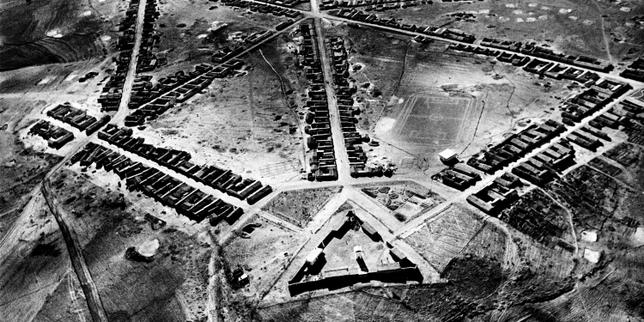
Most people recognize the Algerian War of Independence through the lens of urban battles or diplomatic shifts. However, a massive demographic engineering project took place in the rural interior that changed the physical and social makeup of the country forever. Between 1954 and 1962, the French military uprooted over two million Algerian peasants, forcing them into what were officially called centres de regroupement or regroupment centers.
This was not a voluntary move toward modernization. It was a strategic military maneuver designed to isolate the National Liberation Front (FLN) from its social base in the countryside. By removing the population from their ancestral lands, the military intended to create 'forbidden zones' where anything that moved could be targeted. For the families involved, it meant leaving behind their livestock, their crops, and their history for a life behind barbed wire.
Life Inside the Perimeter
The transition from a traditional agrarian lifestyle to the camps was often fatal. These settlements were rarely prepared for the influx of thousands of people. Basic necessities like clean water, adequate shelter, and food supplies were frequently non-existent. Historians estimate that more than 200,000 residents died within these camps due to exposure and malnutrition, with children making up nearly two-thirds of that number.
- Loss of Autonomy: Farmers who once lived off the land became dependent on meager military rations.
- Sanitary Crisis: Overcrowding in makeshift huts led to the rapid spread of diseases.
- Social Rupture: The traditional village structure, which provided a safety net for families, was intentionally broken apart.
Journalist Lorraine Rossignol has recently brought these accounts back to the surface, documenting how these spaces functioned as a form of total control. Unlike a prison, where an individual is held for a specific period, these camps held entire communities in a state of permanent suspension. The goal was to monitor every movement and interaction, effectively turning a civilian population into a managed resource.
The Long-Term Impact on Modern Algeria
The legacy of the camps did not vanish when the war ended in 1962. The forced displacement permanently altered the geography of Algeria. Many of these temporary centers eventually grew into permanent towns and cities. The traditional rural economy was so thoroughly dismantled that thousands of families could never return to their original way of life.
The Urbanization of Trauma
When the barbed wire was taken down, the people remained in these new, artificial hubs. This led to a rapid, unplanned urbanization that still affects Algerian infrastructure today. The transition from a peasant society to an urbanized one happened in less than a decade, forced by military decree rather than economic evolution.
Understanding this history is essential for anyone looking at the social dynamics of North Africa today. It serves as a stark reminder of how military strategy can leave permanent scars on the physical environment and the collective memory of a nation. Now you know that the modern map of Algeria was drawn not just by architects, but by the forced movements of two million people seeking to survive an invisible war.

Convert PDF to Word — Word, Excel, PowerPoint, Image