







The Industrialization of Phishing: Why Security Software is Losing the War of Friction
The Asymmetry of the Attack Surface
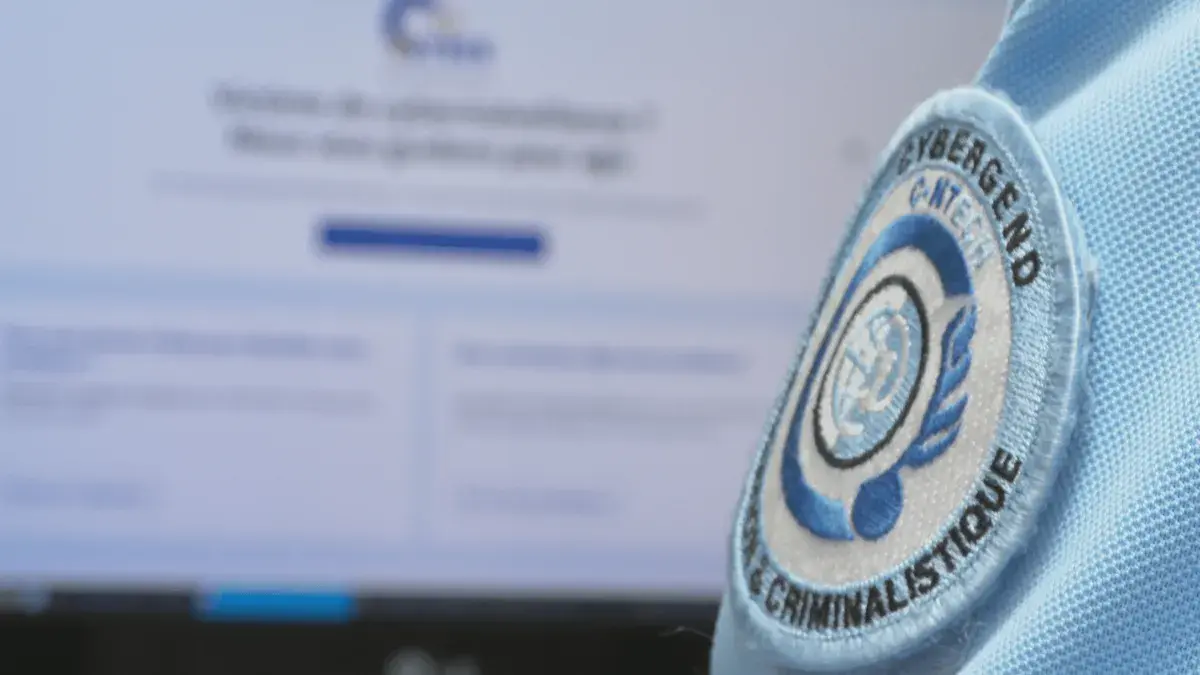
Cybersecurity is the only industry where the attacker’s Customer Acquisition Cost (CAC) is effectively zero while the defender’s maintenance cost scales linearly with headcount. The recent wave of sophisticated phishing attempts reported by law enforcement highlights a fundamental shift in the unit economics of fraud. It is no longer about mass-mailing millions of broken links; it is about high-conversion, localized social engineering that mimics trusted institutional workflows.
For founders and operators, the takeaway is clear: the technical moat is evaporating. When an attacker can spoof a local authority or a service provider with perfect linguistic accuracy, the battle moves from the network layer to the identity layer. This is a game of psychological friction where the goal is to bypass multi-factor authentication (MFA) by weaponizing urgency.
The Business Model of Deception
We need to stop viewing phishing as a technical glitch and start viewing it as a competing business model. These entities operate with specialized departments: one team for lead generation (scraping data), one for product development (creating the spoofed pages), and one for fulfillment (laundering the stolen assets). Their margins are astronomical because they incur no R&D costs; they simply shadow the UI/UX of legitimate brands.
- Social Proofing: Attackers use local context—such as specific regional events or local government branding—to lower the target’s defensive threshold.
- Urgency-as-a-Service: By creating a fake crisis, such as a compromised account or a legal threat, they force the user to bypass standard internal protocols.
- Credential Harvesting: The goal is rarely the immediate cash grab; it is the long-term access to a corporate network, which can be sold on secondary markets for Ransomware-as-a-Service (RaaS) deployment.
"These techniques are specifically designed to deceive the user by mimicking the visual and linguistic cues of trusted institutions."
Who Wins and Who Loses in the Zero-Trust Era
The biggest losers here are the legacy security firms relying on static blacklists of known malicious URLs. The shelf life of a phishing domain is now measured in hours, not days, making reactive blocking obsolete. Security awareness training firms are also hitting a ceiling; you cannot train away human instinct during a high-stress moment. The winners will be the Hardware Security Key manufacturers and the passwordless authentication platforms that remove the human from the loop entirely.
Strategic Implications for GTM
- Verification Moats: Companies must now invest in outbound communication transparency so users can verify the source of an email within their own app.
- Friction as a Feature: Intentional delays in high-value transactions act as a circuit breaker for social engineering.
- Data Minimization: Every piece of PII stored is a liability that helps attackers build a more convincing profile for future phishing attempts.
The current space proves that Zero Trust is not just a marketing buzzword; it is a structural necessity. If your business model relies on users clicking links in emails to perform sensitive actions, you are effectively subsidizing the hackers’ next campaign. The transition to biometrics and hardware-backed identity is the only way to break the ROI of the phishing industry.
My bet: I am shorting any SaaS platform that still relies on SMS-based 2FA as its primary security layer. I am betting on passkey adoption and companies building the 'Proof of Personhood' stack. The future belongs to the platforms that assume every incoming communication is a lie until proven otherwise by a cryptographic handshake.

Free PDF Editor — Edit, merge, compress & sign